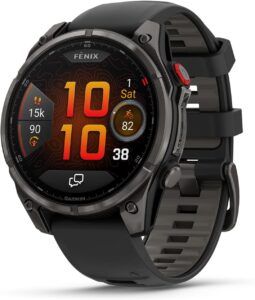
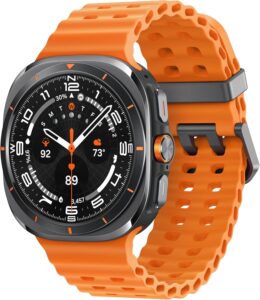
Galaxy Watch Ultra vs Garmin Fenix 8 Pro AMOLED
| Category | Garmin Fenix 8 Pro AMOLED | Samsung Galaxy Watch Ultra |
|---|---|---|
| Design & Build | ★★★★★ 5 | ★★★★☆ 3.5 |
| Display | ★★★★☆ 4 | ★★★★★ 4.5 |
| Fitness Tracking | ★★★★★ 5 | ★★★★☆ 3.5 |
| Battery Life | ★★★★★ 5 | ★★★★☆ 4 |
| Value | ★★★★☆ 4 | ★★★★★ 4.5 |
| Overall | ★★★★★ 4.6 | ★★★★☆ 4 |
Which Is Better for Android Users?
Two Weeks on the Wrist: My Testing Method
I wore both the Samsung Galaxy Watch Ultra and the Garmin Fenix 8 Pro AMOLED simultaneously for two weeks — one on each wrist — doing workouts, tracking sleep, testing connectivity, and living with both as daily wearables. I’ve also published full in-depth reviews of each watch individually, so this comparison is pulling from a depth of real use rather than a quick first-impression test.
The context matters here: I recently switched from the iPhone 17 Pro Max to the Samsung Galaxy S26 Ultra as my daily driver, which means I moved fully into the Samsung ecosystem for the first time in years. That brought the Galaxy Watch Ultra along for the ride. But I’ve been a long-time Garmin user, and after spending time with the Fenix 8 Pro AMOLED, I wasn’t ready to let it go. So I wore both. Here’s what I found.
Design & Build Quality
On paper, both of these watches look the part of a premium sport wearable. In practice, the durability difference became obvious fast.
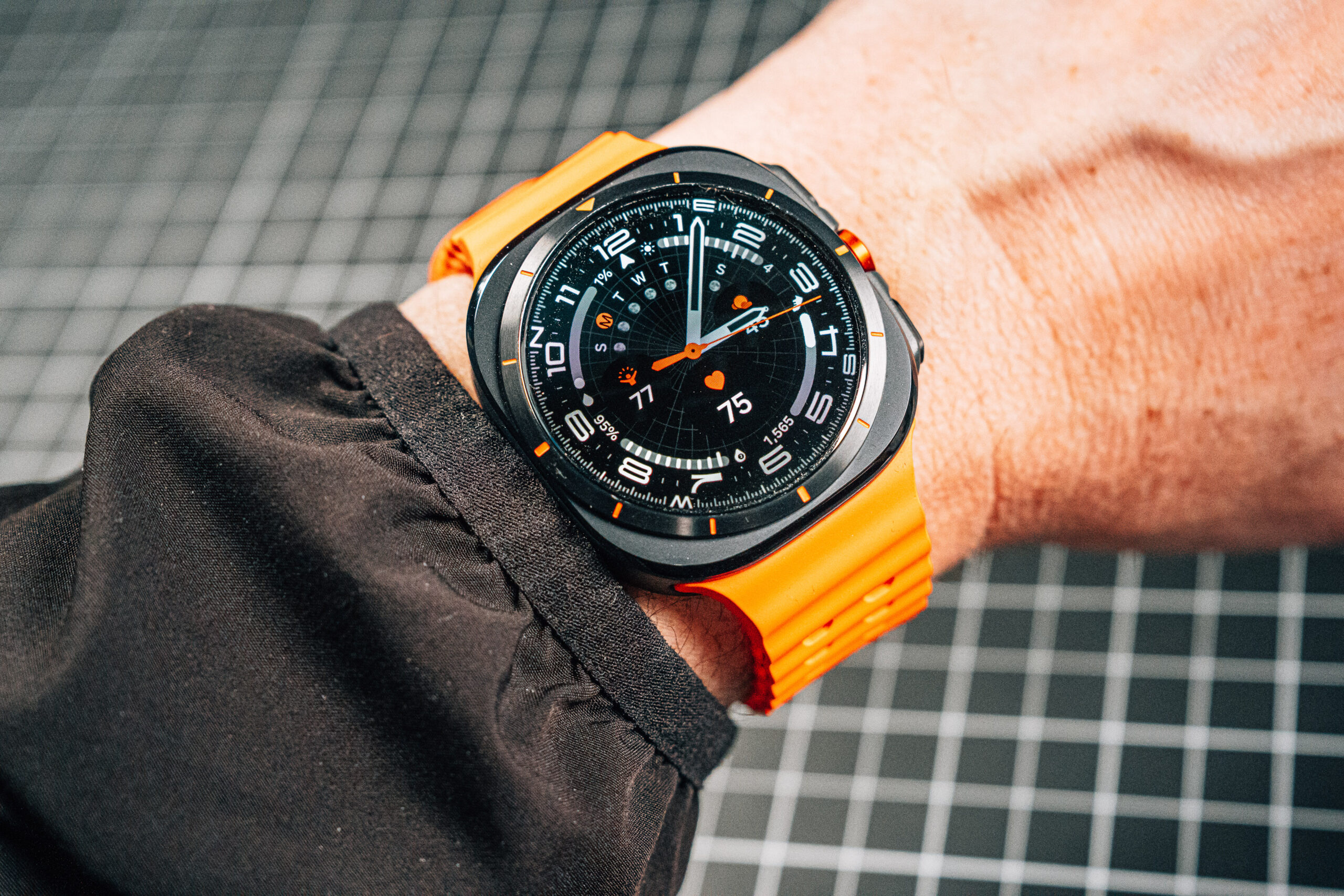
The Galaxy Watch Ultra has a distinctive squircle shape — somewhere between a square and a circle — that looks striking on the wrist. The titanium frame feels premium when you first put it on. But after just two weeks of normal daily use, I was already seeing visible scuff marks around the inner bezel. Not from hiking or dropping it — from sliding my hand in and out of pants pockets. There are also scuffs on the side of the case that I can only attribute to brushing up against my treadmill rail during workouts. I tried wiping them off thinking it was dirt. It wasn’t. You can feel the marks with your fingernail. The orange sport band also picked up some light discoloration from everyday contact with denim and my leather mouse pad.
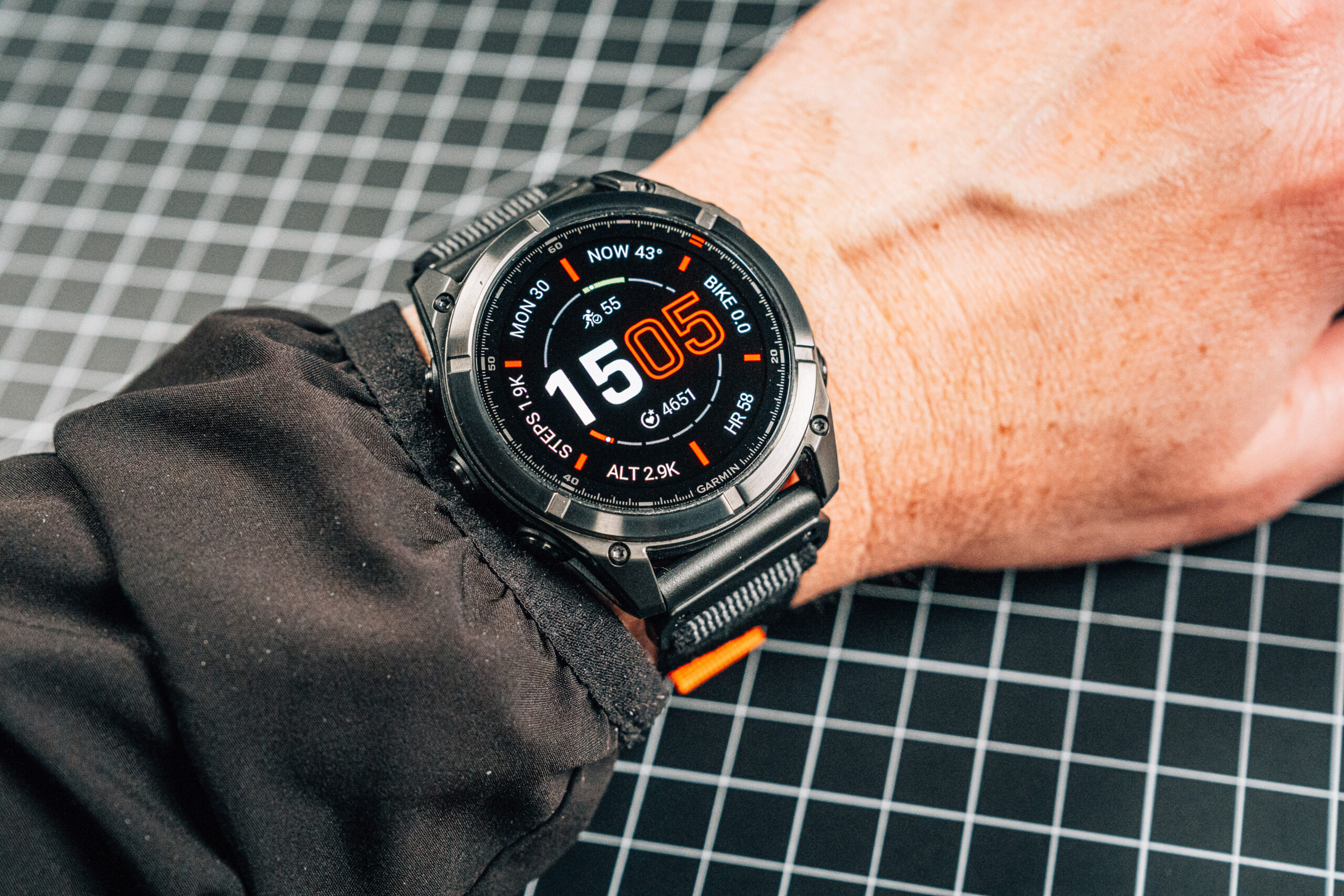
The Garmin Fenix 8 Pro AMOLED tells a very different story. I’ve had this watch since its launch day — significantly longer than two weeks — and outside of one deliberate hard knock that left a faint mark I have to look for, the watch looks essentially brand new. No pocket scuffs. No bezel wear. Whatever Garmin is doing with the materials and finish on the Fenix 8, it holds up. The Fenix also has a more traditional circular sport watch design with a five-button navigation layout that feels purposeful and easy to use with gloves or during a workout.
Both watches carry impressive water resistance ratings and are built for active outdoor use. But if you’re going to spend premium money on a wearable, you want it to still look like a premium product after a year of wear. Based on my two-week test, the Garmin is the clear winner on long-term durability.
Display
Both watches ship with AMOLED displays in their respective configurations for this comparison. The Galaxy Watch Ultra has a round display with bright, crisp visuals and a smooth refresh rate. The Fenix 8 Pro AMOLED matches it with an equally sharp screen that looks excellent in all lighting conditions.
The Galaxy Watch Ultra’s display is larger and feels more like interacting with a mini smartphone. Swiping feels smooth, and the Always-On Display works well without dramatically impacting battery life. Navigation is gesture-forward — you swipe through cards and panels — and it responds quickly.
The Garmin Fenix 8 Pro AMOLED display is bright and readable. Garmin offers multiple versions of this watch — the standard LCD, the AMOLED, and a MicroLED variant at a higher price point. Having spent time with all three, I’ll tell you the AMOLED and MicroLED are difficult to distinguish in everyday use. The AMOLED version is the sweet spot in the Fenix 8 lineup. One thing the Garmin lacks is the touch-gesture fluidity of the Galaxy Watch — navigation is primarily button-driven, which some users will prefer and others will find dated compared to the Samsung experience.
For sheer display quality and interaction experience, the Galaxy Watch Ultra edges ahead here. The screen is gorgeous and the touch navigation feels more modern. But Garmin’s display is no slouch, and for workout use where you’re glancing quickly at data, it delivers everything you need.
Fitness Tracking
This is where the two watches diverge most sharply, and it’s the category that will determine which watch is right for you.
The Galaxy Watch Ultra is a solid fitness tracker. Workouts are easy to start — one button press gets you into the activity selector — and the workout data is accurate and detailed. Heart rate monitoring, sleep tracking, and recovery metrics all work well within the Samsung Health ecosystem. If you’re a Galaxy phone user who wants workout awareness built into your daily tech life, the Galaxy Watch delivers that seamlessly. Notifications from your phone show up exactly as you’d expect. You can respond to messages. Samsung Pay works. It’s a smartwatch that also tracks fitness, and it does both parts reasonably well.
The Garmin Fenix 8 Pro is in a completely different league for fitness and activity tracking. The number of supported workout types, the granularity of the data, the training load and recovery analysis, the body battery metric, VO2 Max tracking, and the depth of the Garmin Connect app are unmatched by any smartwatch currently on the market — including the Apple Watch Ultra 2. If you’re a serious athlete, a data-driven fitness person, or someone who does a wide variety of activities, the Garmin will give you information the Galaxy Watch simply cannot.
One feature worth calling out specifically: the Garmin’s flashlight. Double-tapping the top-left button activates a genuinely bright flashlight — I use it every morning around 4 a.m. when I head downstairs for my workout without waking the house. The Galaxy Watch Ultra has a flashlight too, but it’s noticeably dimmer and takes more taps to access. It barely lights up a surface in front of you. The Garmin’s flashlight works like an actual flashlight. Small thing, meaningful difference.
The Garmin also has Garmin inReach satellite messaging via the Messages app — meaning even if you’re outside of cellular coverage on a long trail run or hike, someone with the Garmin Messages app on their phone can reach you. The Galaxy Watch Ultra has true cellular (shared number with your Galaxy phone), which is better for standard smartphone connectivity, but the Garmin’s satellite messaging is a genuine safety feature for backcountry use.
For fitness tracking, it’s not even close. Garmin wins by a wide margin.
Battery Life
Battery life is one of the Garmin’s defining advantages, and the numbers during my testing made it concrete rather than theoretical.
The Galaxy Watch Ultra at 2:45 p.m. on a full day of use — including a full night of sleep tracking, an hour of non-GPS workout, and all-day Always-On Display — sat at 77%. That’s genuinely impressive battery life for an Android smartwatch with cellular, and it held up consistently throughout my two weeks of testing. For a smartwatch, it’s excellent.
The Garmin Fenix 8 Pro AMOLED at the same point in my testing showed 73% with 18 days remaining. That’s not a typo — 18 days of estimated battery remaining after multiple days of use including workouts and sleep tracking. The reason Garmin can do this comes down to optimization: the Fenix runs its own closed ecosystem that isn’t constantly syncing, pushing notifications, and running background tasks the way a smartwatch does. The watch changes state slowly, which allows Garmin to keep power draw extremely low.
The tradeoff is that the Garmin’s more static nature is what enables the battery life. The Galaxy Watch is more dynamic — more like a phone on your wrist — which is why it needs charging more often. Both approaches make sense given what each watch is trying to be. But for users who hate thinking about charging or who go on multi-day trips without reliable power, the Garmin is in its own category.
Value
This is the most complicated category because the price difference is substantial and the value depends entirely on what you need.
The Galaxy Watch Ultra launched at a higher price point, but has since settled to around $599, which is a more appropriate price for what it offers. At that price, you get a premium Samsung smartwatch with cellular, solid fitness tracking, a beautiful display, and seamless Galaxy ecosystem integration. For a Galaxy phone user who wants a capable, connected daily wearable, the value proposition at $599 is reasonable.
The Garmin Fenix 8 Pro AMOLED is $1,299. That’s more than double the Galaxy Watch Ultra. There are cheaper Garmin options — the Fenix E starts around $800 — but even the entry point of the Fenix line is more expensive than the Galaxy Watch Ultra. At $1,299, you need to want what the Garmin specifically delivers: class-leading fitness data, extraordinary battery life, and a watch built to last years without showing wear.
If you’re a casual fitness tracker who wants a smartwatch that integrates tightly with your Galaxy phone, the Galaxy Watch Ultra at $599 is the better value. If you’re a serious athlete, an outdoor enthusiast, or someone who prioritizes fitness data depth and durability above all else, the $700 premium for the Garmin is justifiable. You’re buying a different product for a different purpose.
Our Verdict
Winner: Garmin Fenix 8 Pro AMOLED
After two weeks wearing both watches simultaneously, the Garmin Fenix 8 Pro AMOLED is the better watch — but that statement comes with an important caveat: it's the better watch for a specific kind of person, and the $700 premium only makes sense if you're that person.
The Garmin wins because it does what it's designed to do better than anything else on the market. Fitness tracking depth, battery life that genuinely removes charging anxiety, and build quality that still looks new after extended daily use — these aren't marginal advantages. They're the reasons serious athletes and outdoor enthusiasts gravitate to Garmin and stay there.
The Samsung Galaxy Watch Ultra is the right choice if you're a Galaxy ecosystem user who wants a smartwatch that integrates tightly with your phone. True cellular, Samsung Pay, full notification management, a beautiful display, and solid all-day fitness tracking are all present and work well. At $599, it's a genuinely capable product. And for most Galaxy phone users, it's the more practical daily choice.
The decision ultimately comes down to one question: do you want an activity monitor or a smartwatch? The Garmin is an activity monitor first, with smartwatch features bolted on. The Galaxy Watch Ultra is a smartwatch first, with fitness tracking built in. Both are good at their primary purpose. Choose based on which primary purpose matches how you actually live.
Was this helpful?
Frequently Asked Questions
Is the Garmin Fenix 8 Pro worth the extra cost over the Galaxy Watch Ultra?
Which has better battery life: Garmin Fenix 8 Pro or Galaxy Watch Ultra?
Can the Garmin Fenix 8 Pro receive calls and texts without a phone nearby?
Which watch is more durable: Garmin Fenix 8 Pro or Galaxy Watch Ultra?
Is the Galaxy Watch Ultra good for fitness tracking?
Does the Garmin Fenix 8 Pro work with Android phones?
Which is better for everyday use: Galaxy Watch Ultra or Garmin Fenix 8 Pro?

You must be logged in to post a comment.