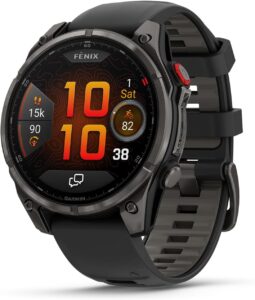
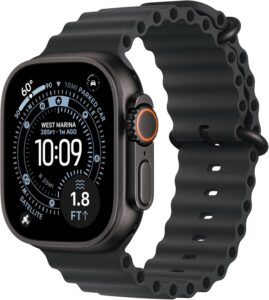
Garmin Fenix 8 Pro AMOLED vs Apple Watch Ultra 3
| Category | Garmin Fenix 8 Pro AMOLED | Apple Watch Ultra 3 |
|---|---|---|
| Battery Life | ★★★★★ 5 | ★★★☆☆ 3 |
| Training & Health Metrics | ★★★★★ 5 | ★★★★☆ 3.5 |
| Satellite & Off-Grid | ★★★★★ 4.5 | ★★★★☆ 4 |
| Ecosystem & Daily Use | ★★★☆☆ 2.5 | ★★★★★ 5 |
| Durability & Build | ★★★★★ 4.5 | ★★★★★ 4.5 |
| Value | ★★★★☆ 3.5 | ★★★★★ 4.5 |
| Overall | ★★★★☆ 4.2 | ★★★★☆ 4.1 |
I’ve owned both the Garmin Fenix 8 Pro AMOLED and the Apple Watch Ultra 3 since launch. I’ve worn them simultaneously, tracked workouts on both at the same time, and used each as my sole daily driver for extended periods. This comparison isn’t about which brand is better — it’s about understanding what kind of data and functionality actually matters to you, because these two watches are solving fundamentally different problems.
Here’s the honest framing before we get into any specs: the Garmin Fenix 8 Pro is a serious fitness computer that happens to have some smart features bolted on. The Apple Watch Ultra 3 is a premium smartwatch that happens to be surprisingly capable for athletes. Neither one is a compromise — they just have different priorities. Getting this distinction wrong is a $800–$1,200 mistake, so let’s make sure you get it right.
Battery Life: The Biggest Practical Difference
Battery life is where these two watches diverge most dramatically, and it has real implications for how you use them day to day. With active GPS, AMOLED always-on display, and all sensors running, the Garmin Fenix 8 Pro delivers multi-day performance that the Apple Watch Ultra 3 simply cannot match.
In my testing with the always-on AMOLED display enabled on the Fenix 8 Pro, I’ve consistently seen 9+ days of battery life with 59% remaining — meaning the watch projects roughly 15 days total under those conditions. Disable the always-on display and you’re looking at closer to 3 weeks of total battery life. That kind of endurance changes how you relate to the watch entirely. You stop thinking about charging it.
The Apple Watch Ultra 3, by comparison, needs to be charged nightly for most users. I consistently hit around 68% battery by mid-morning before a workout, and with sleep tracking enabled, I’m realistically getting a day and a half to two days before needing to plug in. That’s not a flaw — it’s a design philosophy. Apple optimizes for features, integration, and experience. Garmin optimizes for endurance.
The practical question isn’t which number is bigger. It’s whether your use case actually exposes that gap. If you’re doing day hikes and weekend runs, a nightly charge is no burden. If you’re spending 5 days in the backcountry without access to power, the Garmin’s battery life isn’t a feature — it’s a requirement.
Satellite and Off-Grid Communication: Two Very Different Approaches
Both watches offer satellite connectivity, but the implementation, intended audience, and ongoing cost are completely different.
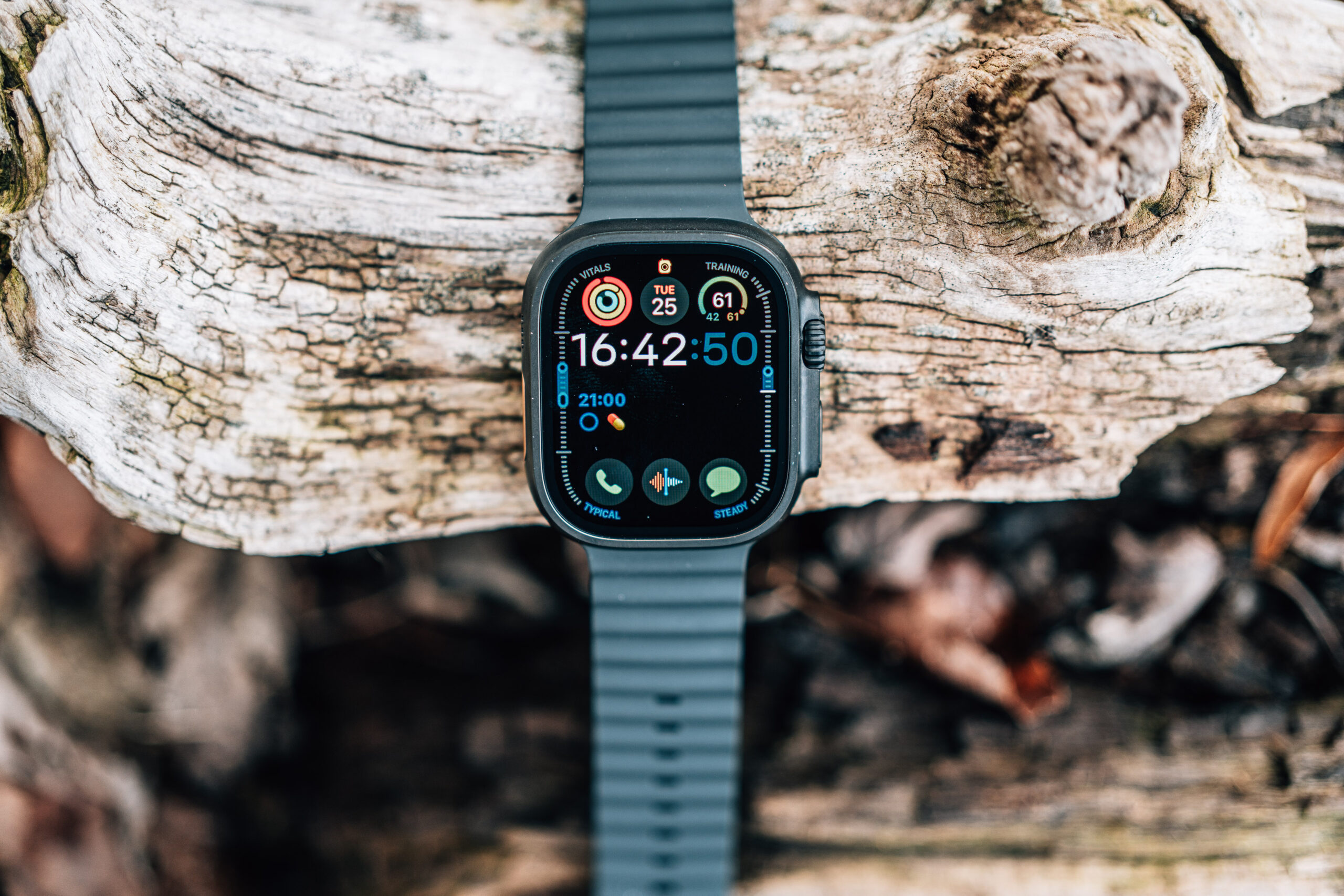
The Apple Watch Ultra 3 includes satellite SOS and comes with 2 years of satellite messaging at no extra cost. It uses the same satellite infrastructure as iPhone’s Emergency SOS via Satellite. For the majority of people — trail runners, cyclists, parents who want a safety net — this is more than sufficient. The key limitation is that satellite features require line-of-sight with the sky. Dense tree cover causes problems, and the service is still maturing in terms of global coverage.
The Garmin Fenix 8 Pro uses Garmin’s inReach technology, which is a more mature two-way satellite messaging platform that has been in the field far longer. The critical difference: inReach requires its own subscription plan after a 30-day free trial, which can cost as much as $50 per month depending on the tier you need. It also requires the people communicating with you to have the Garmin Messenger app installed on their device — a meaningful layer of friction if you’re expecting family members to receive check-in messages.
For cellular connectivity in general, the Apple Watch Ultra 3 has a clear advantage. It has built-in 5G with its own data plan (I pay an extra $15 per month through my carrier), which means leaving your phone at home isn’t a compromise — calls, texts, streaming, and app updates all work normally through your watch’s own connection. The Garmin requires Bluetooth proximity to your phone for standard calls and messages. Out of range? You’re relying on inReach or nothing.
Who wins this category depends entirely on use case. For everyday disconnected use and general safety coverage, the Apple Watch Ultra 3 is the more practical and cost-effective option. For serious backcountry expeditions where you’ll be off-grid for days and need reliable two-way satellite communication, Garmin’s inReach ecosystem is more mature and purpose-built for that scenario.
Training and Health Metrics: Garmin Is in a Different League
This is the category that defines the Fenix 8 Pro’s identity, and Garmin has earned its reputation here through years of iterative development with serious athletes.
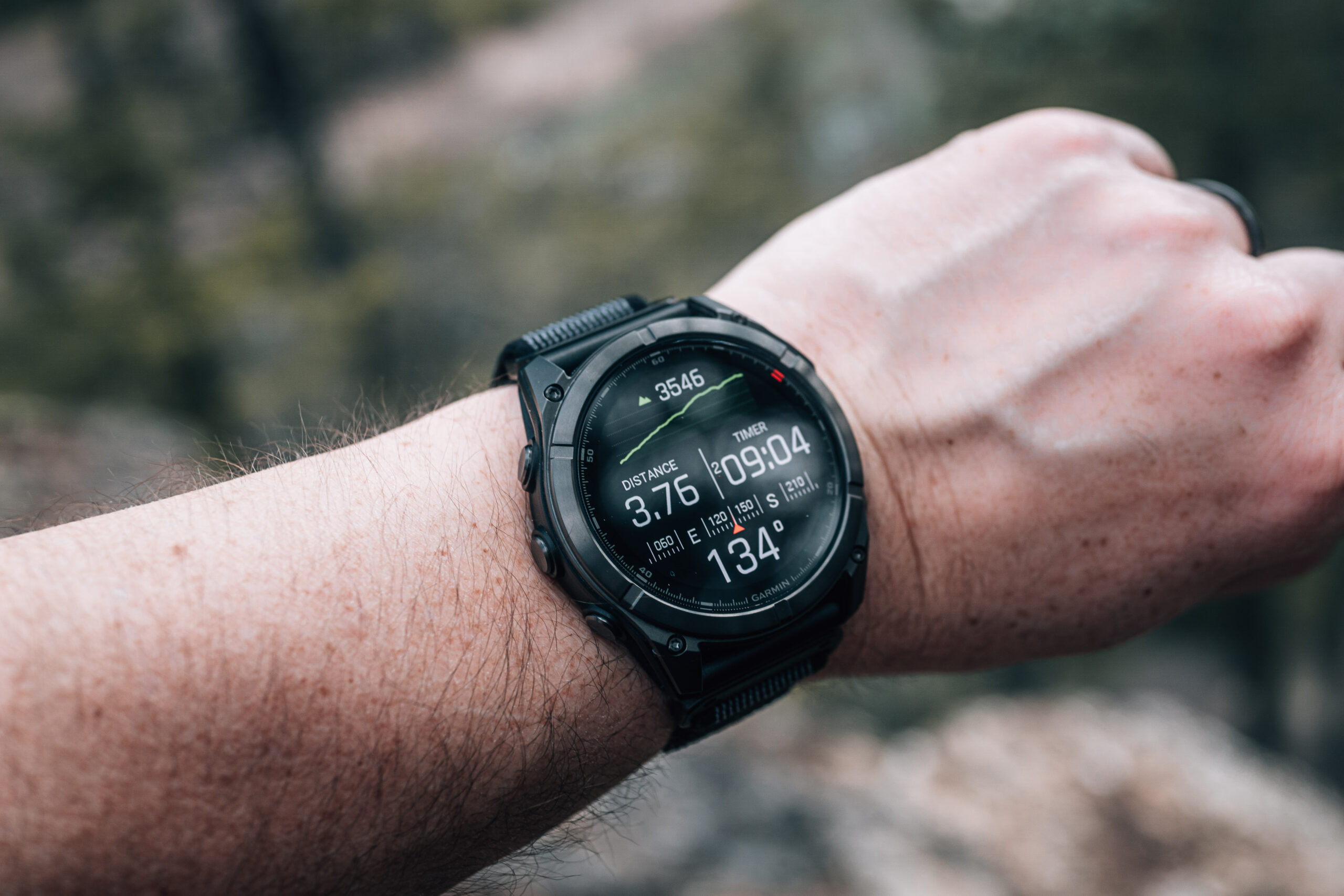
The Fenix 8 Pro offers VO2 Max estimation, Training Readiness scores, Recovery Advisor, HRV Status, Training Load tracking, stamina metrics, and over 40 sport profiles. Third-party data sync with platforms like Strava, TrainingPeaks, and others is deep and reliable, making it the right tool for anyone working with a coach or following a structured training plan.
One real-world limitation of the Apple Watch Ultra 3 that I discovered through personal experience in northwestern Montana: VO2 Max tracking requires outdoor workouts. During winter months when most of my training moves to a treadmill, weights, and stationary equipment, the Apple Watch simply stops updating VO2 Max. My score drops steadily through the cold months with no data to counter it. The Garmin tracks VO2 Max and HRV regardless of workout environment, indoors or out, which means you get consistent data year-round.
The Apple Watch Ultra 3 covers the health monitoring fundamentals well — ECG, blood oxygen, sleep tracking, temperature sensing, blood pressure notifications, and a solid range of workout modes. For someone who works out regularly but isn’t training for a specific event or working with a structured program, the Ultra 3’s data is genuinely useful. But it doesn’t approach the depth, breadth, and analytical sophistication of what Garmin delivers.
If a coach or a training plan is part of your life, Garmin is the right tool. If you want accurate health awareness and solid workout logging without the complexity of a full athletic tracking system, the Ultra 3 is excellent.
Ecosystem and Daily Use: Apple’s Strongest Advantage
Outside of workouts, the Apple Watch Ultra 3’s integration with the Apple ecosystem creates a daily experience that the Garmin cannot match, and this gap matters more than most fitness-focused buyers anticipate.
The continuity features alone are worth calling out: my MacBook automatically unlocks when it detects my watch nearby. App installations and system prompts authenticate with a double tap on the watch crown. Apple Pay works across every Apple device in my house, including Apple TVs — a quick double tap on the watch confirms purchases without reaching for a wallet or phone. Siri handles calls, messages, and reminders. Third-party apps on watchOS are polished and genuinely useful.
Garmin’s ecosystem tells a different story. Garmin Pay exists but is noticeably slower and more cumbersome than Apple Pay — I find myself reaching for a card instead. Notification mirroring from phone to watch works, but the customization options are limited: you’re essentially choosing between all notifications, no notifications, or an imprecise middle ground. Call interaction through the Garmin watch is functional but behind where Apple is. When I used the Fenix 8 Pro as my sole daily driver for an extended stretch, the honest experience was: I loved the fitness tracking, but outside of workouts, the watch didn’t add much to my day.
If you’re an iPhone user spending most of your waking hours doing things other than structured workouts, that gap is going to matter every single day.
Durability and Build Quality: Both Are Built to Last
These are two of the most durable consumer watches available, and both will outlast the abuse most people put them through.
The Garmin Fenix 8 Pro is expedition-grade by design. Physical buttons around the case make it usable in rain, with gloves, or in situations where a touchscreen becomes unreliable. The flashlight built into the watch face is genuinely useful — bright enough to be practically helpful in the dark, not just a novelty. After owning mine and making regular contact with hard surfaces by accident, the only mark I’ve found is a single small scratch that’s barely visible. Everything else looks nearly new.
The Apple Watch Ultra 3 uses a titanium case with a sapphire crystal display. Despite wearing it more consistently than the Garmin over my testing period, it shows zero marks, dings, or scratches. The 100-meter water resistance on the Apple Watch is excellent for swimming, but the Garmin’s 100-meter rating is also validated for diving — a distinction that matters for that specific use case.
The more meaningful durability difference in real-world use is the input method. The Fenix 8 Pro is primarily button-driven, which means it’s more reliable in conditions where swipe gestures become difficult. The Apple Watch Ultra 3 is primarily touch-driven with physical button support. Neither is fragile, but if your activities involve situations where a touchscreen isn’t practical, Garmin’s button-first design is a functional advantage.
Price and Value: Total Cost of Ownership Matters
At face value, the Garmin Fenix 8 Pro AMOLED is $1,199 and the Apple Watch Ultra 3 is $799. But the total cost of ownership calculation isn’t that simple.
The Apple Watch Ultra 3 includes 2 years of satellite messaging with no additional subscription. If you want cellular connectivity for calls and data away from your phone, that’s an additional $15 per month through most carriers — a reasonable cost for the functionality it unlocks.
The Garmin Fenix 8 Pro includes a 30-day inReach trial. After that, satellite messaging plans start at a lower tier and can run as high as $50 per month for full service. If you need that capability regularly, add it to the purchase price. If you only need it for specific trips, Garmin does offer a flexible month-to-month option you can activate and pause.
The Garmin also has a longer product refresh cycle — when you buy a Fenix 8, that watch will remain current for two to three years. Apple releases a new Ultra annually. That said, older Apple Watch Ultra models continue to receive software updates and remain fully functional. The original Apple Watch Ultra still performs well for people using it today.
The value question ultimately comes down to which feature set you’ll actually use. Buying the Garmin’s deep training features when you run twice a week casually is paying a premium for data you won’t look at. Buying the Apple Watch Ultra when your primary use case is backcountry expeditions is accepting limitations that will matter in the field.
Who Should Buy the Garmin Fenix 8 Pro AMOLED
The Fenix 8 Pro is the right watch if structured athletic training is a central part of your life. If you’re following a periodized training plan, working with a coach, training for an ultra marathon, a triathlon, or any endurance event where data depth translates directly to performance outcomes — this is your watch. It’s also the clear choice for serious backcountry adventurers who need multi-day battery life and mature two-way satellite communication through the inReach ecosystem.
You should also consider the Fenix 8 Pro if smartphone dependency is something you actively want to reduce. It won’t nag you with app notifications. It doesn’t integrate deeply with your phone’s ecosystem. It does one thing at an extremely high level and everything else adequately. For some people, that’s exactly the right tradeoff.
Who Should Buy the Apple Watch Ultra 3
The Apple Watch Ultra 3 is the right watch for anyone who wants serious athletic capability without giving up the full smart watch experience. If you’re an iPhone user who trains regularly but doesn’t have a coach and isn’t preparing for elite competition, the Ultra 3 gives you data that’s more than sufficient while delivering an ecosystem integration experience that improves your entire day — not just your workouts.
It’s also the better choice if leaving your phone at home is important to you. The 5G cellular connection means you’re genuinely reachable, able to stream music, and fully connected without carrying a device. For parents, professionals, and anyone who wants to be present without being completely disconnected, that capability is worth a great deal.
My personal choice is the Apple Watch Ultra 3. I’m in my mid-40s, running a business, raising a family, and fitting workouts in where they fit. I’m not training for anything that requires the depth of data the Garmin delivers. What matters most to me is being able to leave my phone behind without feeling cut off — and the Ultra 3 handles that better than any other watch I’ve tested.
Our Verdict
It's a Tie
The honest answer is that neither watch wins outright — they're built for different people, and buying the wrong one is a significant mistake either way.
Choose the Garmin Fenix 8 Pro AMOLED if structured athletic training is a genuine priority in your life. The depth of data — VO2 Max tracked across all workout environments, Training Readiness, HRV Status, Recovery Advisor, 40+ sport profiles, and reliable third-party sync to platforms like TrainingPeaks — is in a different league than anything Apple offers. Add in multi-week battery life and the mature inReach satellite ecosystem for backcountry use, and the Fenix 8 Pro is the clear choice for serious endurance athletes and adventurers who need a watch that can outlast their ambitions. The higher price and limited smart features are real tradeoffs, but for the right person they're entirely worth it.
Choose the Apple Watch Ultra 3 if you want a watch that handles both worlds well — serious enough for regular workouts, polished enough for a boardroom, and deeply integrated with the iPhone ecosystem you already live in. The 5G cellular connectivity means you can genuinely leave your phone behind without losing access to calls, messages, and music. The Apple ecosystem integration — automatic Mac unlock, Apple Pay across all your devices, seamless Siri interaction — makes the watch useful every hour of the day, not just during workouts. At $400 less than the Fenix 8 Pro, with satellite messaging included for two years, it also delivers better total value for the majority of buyers.
After daily driving both watches and testing them head-to-head across workouts and everyday use, the Apple Watch Ultra 3 is the right choice for most people reading this — including me. The Garmin earns its reputation, but it earns it for a specific kind of user. If that's not you, the Ultra 3 is a better fit for your actual life.
Was this helpful?
Frequently Asked Questions
Is the Garmin Fenix 8 Pro AMOLED worth the extra $400 over Apple Watch Ultra 3?
How does Garmin Fenix 8 Pro battery life compare to Apple Watch Ultra 3?
Can the Garmin Fenix 8 Pro replace a smartphone for calls and messages like the Apple Watch Ultra 3 can?
Which watch is better for running: Garmin Fenix 8 Pro or Apple Watch Ultra 3?
Does the Apple Watch Ultra 3 work without an iPhone nearby?
Which watch is better for backcountry and outdoor adventures?
How does Apple Watch Ultra 3 compare to Garmin Fenix 8 Pro for health monitoring?
Is the Garmin Fenix 8 Pro AMOLED display better than Apple Watch Ultra 3?
Does Garmin Fenix 8 Pro work with iPhone?
What is the inReach subscription cost for the Garmin Fenix 8 Pro?
Which watch has better GPS accuracy — Garmin Fenix 8 Pro or Apple Watch Ultra 3?
How durable is the Garmin Fenix 8 Pro compared to Apple Watch Ultra 3?

You must be logged in to post a comment.