iPhone 17 Pro Max vs. iPhone 17 vs. iPhone Air: Which iPhone Actually Deserves Your Pocket?
| Category | iPhone 17 Pro Max | iPhone 17 | iPhone Air |
|---|---|---|---|
| Camera System | ★★★★★ 5 | ★★★★☆ 4 | ★★★☆☆ 2.5 |
| Battery Life | ★★★★★ 5 | ★★★★☆ 4 | ★★★☆☆ 3 |
| Portability & Comfort | ★★★☆☆ 3 | ★★★★★ 4.5 | ★★★★★ 5 |
| Performance | ★★★★★ 5 | ★★★★☆ 4 | ★★★★★ 4.5 |
| Value for Money | ★★★★☆ 4 | ★★★★★ 5 | ★★★★☆ 3.5 |
| Overall | ★★★★☆ 4.4 | ★★★★☆ 4.3 | ★★★★☆ 3.7 |
A hands-on verdict after owning and daily-driving all three phones — tested on real life, not benchmarks — from someone who’s been reviewing iPhones since the original.
Introduction
I’ve been reviewing phones since Steve Jobs pulled the original iPhone out of his pocket in 2007. That’s nearly two decades of testing, comparing, and daily-driving more phones than I can count. I run a tech review and tips YouTube channel with over 130,000 subscribers, and I’ve been producing tech content on YouTube since 2008. I’m not a spec-sheet regurgitator — I’m a husband, a father of four, and someone who actually needs his phone to work in the real world. When I compare phones, I’m comparing them against the chaos of school pickups, client calls, capturing my kids’ moments, and trying to stay productive without being consumed by technology.
This year, Apple gave us three very different iPhones to choose from, and I bought all three. The iPhone 17 Pro Max has been my daily driver. The iPhone Air lived in my pocket for several weeks and genuinely made me rethink what I need from a phone. And I purchased an iPhone 17 for my wife, but not before using it myself for a few weeks. I have real opinions backed by real use — not a weekend with a review unit.
My verdict up front: the iPhone 17 Pro Max is still the phone I carry every day, and the one I’d recommend to anyone who values cameras and battery life above all else. But this comparison isn’t that simple. For many of you, the iPhone 17 or even the Air might be the smarter buy. Let me explain why.
Scoring Overview
| Category | iPhone 17 Pro Max | iPhone 17 | iPhone Air |
|---|---|---|---|
| Camera System | 5.0 | 4.0 | 2.5 |
| Battery Life | 5.0 | 4.0 | 3.0 |
| Performance | 5.0 | 4.0 | 4.5 |
| Display | 5.0 | 4.5 | 4.5 |
| Portability & Comfort | 3.0 | 4.5 | 5.0 |
| Value for Money | 3.5 | 5.0 | 3.5 |
| Overall | 4.4 | 4.3 | 3.8 |
Those scores are close between the Pro Max and the standard 17 for a reason. This is the tightest three-way race Apple has produced in years. Keep reading to understand what the numbers mean in practice.
At a Glance: Key Differences
- The Pro Max is the only iPhone with a dedicated telephoto lens — its 48 MP tetraprism reaches 8x optical-quality zoom (200 mm equivalent), while the iPhone 17 tops out at 2x and the Air has no telephoto hardware at all.
- Battery life varies dramatically — the Pro Max delivers up to 39 hours of video playback compared to 30 hours on the iPhone 17 and 27 hours on the Air, and in real-world use, the Air required a midday top-off while the Pro Max routinely lasted into the next morning.
- The Air weighs 68 grams less than the Pro Max (165 g vs. 233 g) and is nearly half as thin (5.64 mm vs. 8.75 mm), making it feel like a fundamentally different product in hand and pocket.
- The iPhone 17 is $400 less than the Pro Max ($799 vs. $1,199) and doesn’t cut corners on the essentials — it gets ProMotion, the same 18 MP Center Stage front camera, and a dual 48 MP rear camera system.
- RAM differs significantly — the Pro Max and Air both pack 12 GB, while the standard iPhone 17 ships with 8 GB, which could matter for Apple Intelligence features and long-term software support.
Specifications at a Glance
| Specification | iPhone 17 Pro Max | iPhone 17 | iPhone Air |
|---|---|---|---|
| Display | 6.9″ OLED, 2868×1320 | 6.3″ OLED, 2622×1206 | 6.5″ OLED, 2736×1260 |
| Refresh Rate | 120 Hz ProMotion | 120 Hz ProMotion | 120 Hz ProMotion |
| Chip | A19 Pro | A19 | A19 Pro |
| RAM | 12 GB | 8 GB | 12 GB |
| Rear Cameras | Triple 48 MP (Main + Ultra Wide + Telephoto) | Dual 48 MP (Main + Ultra Wide) | Single 48 MP (Main only) |
| Optical Zoom Range | 0.5x – 8x | 0.5x – 2x | 1x – 2x (digital crop) |
| Battery (Video Playback) | Up to 39 hours | Up to 30 hours | Up to 27 hours |
| Weight | 233 g (8.22 oz) | 177 g (6.24 oz) | 165 g (5.82 oz) |
| Thickness | 8.75 mm | 7.95 mm | 5.64 mm |
| USB-C Speed | USB 3 (10 Gb/s) | USB 2 (480 Mb/s) | USB 2 (480 Mb/s) |
| Storage Options | 256 GB / 512 GB / 1 TB / 2 TB | 256 GB / 512 GB | 256 GB / 512 GB / 1 TB |
| Starting Price | $1,199 | $799 | $999 |
Camera System: The Deciding Factor for Most Buyers
The Pro Max wins this category by a wide margin, and it’s the primary reason I keep coming back to it.
Let me be specific about why. The Pro Max carries three 48 MP Fusion cameras: a 24 mm main, a 13 mm ultra wide, and — here’s the key — a 100 mm telephoto with a tetraprism design that delivers 8x optical-quality zoom. That telephoto reach changes what’s possible with a phone camera. At my kids’ soccer games, I can frame a tight shot of my daughter on the far side of the field without the mush you get from digital zoom. At a school concert last month, I pulled clean, detailed shots from the back of the auditorium that looked like I’d brought a real camera. You simply cannot replicate that on the other two phones.
The iPhone 17 is no slouch. Its dual 48 MP system — main plus ultra wide — is legitimately excellent. The main sensor is the same ƒ/1.6, 26 mm unit with sensor-shift OIS, and the ultra wide matches the Pro Max spec for spec at 13 mm with a 120-degree field of view. Where it falls short is reach. The “2x telephoto” is a sensor crop from the main camera, giving you a 52 mm equivalent. It’s fine for portraits and close-mid range subjects, but it’s a world apart from having a dedicated telephoto lens. During my weeks with the 17, I found myself physically walking closer to subjects more often, and there were moments — catching a bird on a fence from across the yard, zooming into details at a car show — where I simply couldn’t get the shot.
The iPhone Air is where camera compromises become painful. One rear camera. A single 48 MP main shooter at 26 mm with ƒ/1.6. No ultra wide. No telephoto. Digital zoom tops out at 10x, but anything past 3-4x looks rough. If you primarily take photos of food, landscapes at arm’s length, and selfies, the Air’s camera is perfectly fine — it benefits from the same Photonic Engine and computational photography that powers the entire lineup. But if you’ve ever reached for a zoom or wanted to capture a wide group shot without backing up, the Air will frustrate you.
For video, the gap widens further. The Pro Max shoots ProRes, ProRes RAW, and Apple Log 2 at up to 4K/120fps. The iPhone 17 handles 4K Dolby Vision at up to 60fps with spatial video support. The Air matches the 17 on most video specs but lacks the ultra wide for those sweeping establishing shots. As someone who shoots video for my YouTube channel, the Pro Max’s video capabilities aren’t just nice-to-haves — they’re tools I actually use.
I want to add one more real-world observation. The Pro Max’s front camera — the new 18 MP Center Stage unit — is shared across all three phones, and it’s a genuine upgrade. The way it reframes shots to keep you centered, or widens to capture a group without you asking, is one of those features that sounds gimmicky until you use it on a FaceTime call with your family while traveling. All three phones nail this equally.
But back to the rear cameras: if you’ve ever been at a school event, a birthday party at a park, or your kid’s first bike ride down the street and wished you could zoom in just a little more — the Pro Max is the phone that eliminates that regret. I’ve been reviewing phones for almost two decades, and the gap between having a real telephoto and not having one is the single biggest quality-of-life difference in smartphone photography today.
Winner: iPhone 17 Pro Max, decisively. The telephoto alone justifies the upgrade for anyone who cares about photography. The iPhone 17 is a strong second. The Air is adequate for casual shooting but a serious step down.
Battery Life: Where Size Pays for Itself
The Pro Max dominates battery life, and it’s not particularly close in real-world use.
Apple rates the Pro Max at up to 39 hours of video playback, the iPhone 17 at 30 hours, and the Air at 27 hours. Those are lab numbers, and nobody lives in a lab. Here’s what mattered to me: with the Pro Max, I routinely end a full day — 6 AM to 11 PM, with email, Messages, social media, photos, navigation, and calls — at somewhere between 40-55% battery remaining. I never think about battery. It’s the first iPhone where charging has become something I do out of habit before bed, not necessity.
The iPhone 17 surprised me during my weeks of testing. For most days, it held up admirably. I’d end a typical day around 20-30%. But on heavier days — days with lots of navigation, extended photo sessions, or video calls — I’d find myself watching the percentage drop into single digits by 9 PM. Apple’s shift to the new battery architecture has clearly paid off for the standard 17, but the smaller 3,692 mAh cell versus the Pro Max’s roughly 5,088 mAh means you feel the difference when you push the phone hard.
The Air is where battery anxiety crept back into my life. That 3,149 mAh battery inside a 5.64 mm chassis simply can’t compete with phones that have room for bigger cells. On a light day — some email, Messages, a podcast, casual browsing — I’d make it to evening with 15-20% left. On a busy day, I needed 15-30 minutes on a charger mid-afternoon to make it through dinner and bedtime routines with the kids. Apple rates it at 27 hours of video playback, and I believe that number in a controlled environment, but real-world mixed use told a different story. The Air makes you think about your battery in a way the Pro Max never does.
All three phones support fast charging — 50% in about 20 minutes with a 40W adapter — and all support MagSafe wireless charging. That fast charging capability is part of what makes the Air livable; a quick top-off during lunch goes a long way. I kept a MagSafe charger on my desk and found that even 15 minutes while I ate a sandwich could push the Air from 25% back up to nearly 50%. It’s a workflow adjustment, not a dealbreaker — but it is an adjustment.
One more thing worth mentioning: the Pro Max’s battery architecture — Apple’s new metal-can design paired with the aluminum unibody — has clearly paid dividends. Independent testing from multiple outlets consistently shows 13+ hours of active mixed-use screen time, and my experience tracks with that. On a recent road trip with the family, I used the Pro Max for navigation, shot dozens of photos at our stops, streamed music for the kids in the back seat, and ended the day at 38%. The iPhone 17 would have needed a car charger partway through that day, and the Air definitely would have.
Winner: iPhone 17 Pro Max. If you’re someone who pushes their phone hard and hates worrying about battery, the Pro Max is the only choice that truly delivers all-day-and-then-some confidence. The iPhone 17 is solid for most people. The Air requires a charger to be part of your daily plan.
Performance: More Alike Than You’d Think
This is the category where the gap between these phones is narrower than the marketing suggests.
The Pro Max and Air both run the A19 Pro chip with a 6-core CPU, 6-core GPU (Pro Max) or 5-core GPU (Air), and 16-core Neural Engine. Paired with 12 GB of RAM, both phones handle everything I throw at them without hesitation. The standard iPhone 17 runs the A19 (non-Pro) with a 5-core GPU and 8 GB of RAM. In daily use — launching apps, editing photos, running multiple Focus Modes, using Apple Intelligence features — I genuinely could not feel a difference between the three phones.
Where the A19 Pro earns its keep is in sustained workloads: extended video editing in LumaFusion, exporting ProRes footage, running complex Shortcuts automations, or heavy multitasking. The Pro Max has a vapor chamber cooling system that keeps the A19 Pro from throttling under load, and you notice that advantage during tasks that push the chip for minutes at a time rather than seconds. The Air, despite having the same A19 Pro chip, doesn’t have the thermal headroom to sustain peak performance as long because of its ultra-thin design.
The iPhone 17’s 8 GB of RAM versus 12 GB on the other two is the specification I’d watch long-term. Today, it’s not a meaningful limitation. In two or three years, as Apple Intelligence features grow more demanding and apps consume more memory, that 4 GB gap could start to show. If you tend to keep your phones for three-plus years, this is worth considering.
Winner: iPhone 17 Pro Max, slightly. The vapor chamber cooling and 6-core GPU give it an edge for sustained heavy tasks. But for 95% of daily use, all three phones perform identically.
Display: All Excellent, Different Sizes
All three phones have outstanding displays. Your preference comes down to how much screen real estate you want.
Every phone in this comparison gets Apple’s Super Retina XDR OLED technology, ProMotion up to 120 Hz, Always-On display, HDR support, and up to 3,000 nits of peak outdoor brightness. The days of display quality being a Pro-exclusive feature are over, and that’s a meaningful shift for the iPhone 17 and Air.
The Pro Max’s 6.9-inch panel is the largest canvas Apple offers. For reading articles, watching video, and editing photos, it’s unmatched. But that screen size is also why the phone weighs 233 grams and demands two hands for comfortable use. The iPhone 17’s 6.3-inch display hits a sweet spot for one-handed use while still feeling spacious enough for productivity. The Air’s 6.5-inch panel splits the difference at a size that feels surprisingly large given how thin and light the phone is.
I noticed one subtle difference: the iPhone 17 uses Ceramic Shield 2 on the front with what Apple claims is 3x better scratch resistance, while the Pro Max uses Ceramic Shield 2 on the front and Ceramic Shield on the back. The Air gets Ceramic Shield on both front and back plus a titanium frame. In practice, I didn’t notice any scratch resistance differences between them during my testing, but the Air’s titanium construction does give it a premium in-hand feel that the aluminum phones lack.
One practical note on display size: if you’re someone who reads a lot on your phone — articles, email, documents — the Pro Max’s 6.9 inches genuinely reduces how much you scroll. I read a lot of long-form content, and the difference between 6.3 inches on the iPhone 17 and 6.9 on the Pro Max is more noticeable than the spec suggests. The Air’s 6.5-inch screen, paired with its thin bezels, actually feels larger than you’d expect and was more than comfortable for reading. For video consumption — watching YouTube, streaming — all three are excellent, but the Pro Max is obviously the most immersive.
Winner: Tie. The Pro Max wins on size. The iPhone 17 wins on usability. The Air wins on the screen-to-size ratio. Pick the screen size that fits your life.
Build Quality and Design: Three Distinct Philosophies
Apple made three phones that look like they belong to the same family but feel like they were designed by different teams — and that’s a compliment.
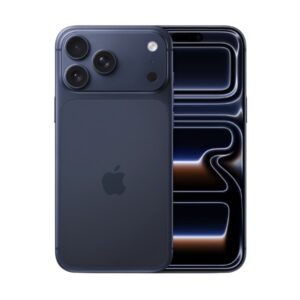
The Pro Max introduces Apple’s aluminum unibody design, replacing the titanium frames of the iPhone 16 Pro models. The result is a two-tone look — aluminum body with a Ceramic Shield cutout on the back for MagSafe charging — that’s divisive in photos but striking in person. The Cosmic Orange color in particular is gorgeous. Aluminum is lighter than titanium and conducts heat better, which feeds into the vapor chamber cooling system. At 8.75 mm thick, it’s slightly thicker than last year’s Pro Max, and the horizontal camera plateau across the back is a dramatic redesign that takes some getting used to. After a few weeks, I forgot the old vertical camera bump ever existed.
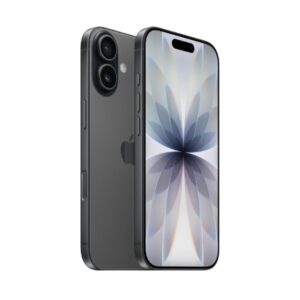
The iPhone 17 keeps a more traditional design with an aluminum frame and color-infused glass back. It comes in five colors — Lavender, Sage, Mist Blue, White, and Black — and looks clean and understated. At 7.95 mm thick, it’s the middle child in every dimension. The build quality is excellent, and it feels premium without the visual statement the Pro Max makes.
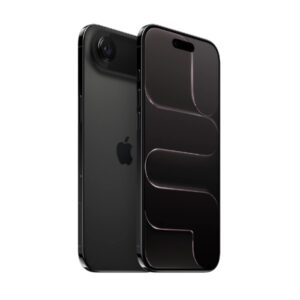
The Air is the showstopper in terms of industrial design. At 5.64 mm, it’s the thinnest iPhone Apple has ever made, and the titanium frame gives it a rigidity and refinement that makes it feel more expensive than its $999 price suggests. Picking up the Air after holding the Pro Max feels like the first time you held an iPad Air after using a regular iPad — you notice the difference immediately, and you don’t want to go back. But thinness has tradeoffs: the speaker system is reduced to a single unit (versus stereo on the other two), and the camera system is limited by the available internal space.
All three phones are IP68 rated for water and dust resistance up to 6 meters for 30 minutes. All three use dual eSIM only — no physical SIM tray — which is worth noting if you travel internationally and rely on swapping physical SIMs.
Winner: Subjective. The Air wins on wow factor and in-hand feel. The Pro Max wins on presence and the confidence that comes from a phone built to house the most capable hardware. The iPhone 17 is the unassuming workhorse that doesn’t need to impress you with its design.
Portability and Comfort: The Air’s Killer Feature
If you’ve ever wished your iPhone was lighter and thinner, the Air is the phone Apple built for you.
This is where I need to be honest about the Pro Max’s biggest weakness: it’s a heavy phone. At 233 grams and 8.75 mm thick, it’s not uncomfortable, but you always know it’s in your pocket. After carrying the Air for several weeks — 165 grams, 5.64 mm thin — going back to the Pro Max felt like strapping a brick to my leg. I’m exaggerating, but only slightly. The Air genuinely changed how I think about what a phone should feel like.
I’ve wanted a lighter, smaller daily driver ever since the iPhone Mini existed. When Apple released the Mini, I hoped that form factor would become the new normal for me. But the Mini always came with too many compromises — smaller battery, smaller screen, and eventually Apple killed the line. The Air revives that promise of a phone that disappears in your pocket, but with a 6.5-inch screen that’s actually larger than the standard iPhone 17.
The iPhone 17 lives in the middle at 177 grams and 7.95 mm. It’s noticeably lighter than the Pro Max and feels comfortable for extended one-handed use. If you’re coming from any recent Pro Max, the 17 will feel refreshing in your hand. It’s not Air-level light, but it’s a meaningful step down from the Pro Max’s heft.
Here’s the reality check, though: every gram Apple saved on the Air came at a cost. The thinness means a smaller battery. The lightness means fewer cameras. There’s always a tradeoff, and whether the Air’s portability wins outweigh its capability losses depends entirely on how you use your phone.
I’ll tell you the moment I realized the Air wasn’t going to be my daily driver. I was at a park with my kids, and my youngest was climbing a play structure about 40 feet away. I wanted to zoom in to capture the concentration on her face. I pinched to zoom on the Air, and the digital zoom past 3-4x turned her into a watercolor painting. That was the moment. I loved carrying the Air. I genuinely did. But I love capturing my kids’ moments more than I love a light pocket.
Conversely, there were days when I was running errands — grocery store, coffee shop, picking kids up from school — where the Air was pure joy to carry. No bulk, no weight pulling my shorts down, no case sticking out of my back pocket. If your phone use is primarily communication, navigation, and quick photos in good light, the Air’s portability isn’t just a nice perk — it fundamentally changes how you relate to your device. It becomes something you carry instead of something you lug.
Winner: iPhone Air. Nothing else in Apple’s lineup comes close to the feeling of carrying the Air. The iPhone 17 is a solid middle ground. The Pro Max trades comfort for capability.
Ecosystem Integration and Daily Workflow
All three phones run the same iOS 26 with the same Apple Intelligence features, but how they fit into your daily life differs.
One thing I appreciate about the 2025 iPhone lineup is that Apple has leveled the playing field on features that used to be Pro-exclusive. All three phones get Dynamic Island, ProMotion, Always-On display, the Action button, and Camera Control. They all support the same Focus Modes, Shortcuts, and Apple Intelligence capabilities. If your primary use case is managing notifications, staying productive, and keeping your digital life intentional — which is what I teach on my channel — all three phones are equally capable.
Where the Pro Max distinguishes itself for workflow purposes is USB 3 transfer speeds. If you’re someone who shoots video and needs to offload large files quickly, the jump from 480 Mb/s (USB 2 on the Air and iPhone 17) to 10 Gb/s (USB 3 on the Pro Max) is enormous. I regularly transfer ProRes footage to my Mac for editing, and the speed difference is the kind of thing that saves you real minutes every day. A 10 GB video file that takes over two minutes on USB 2 transfers in under 10 seconds on USB 3. Multiply that across a day of content creation and it adds up.
The Air and iPhone 17 both use USB 2, which is perfectly adequate for charging and syncing photos. Most people will never notice the slower transfer speed because AirDrop and iCloud handle the heavy lifting. But if file transfer is part of your workflow, the Pro Max has a meaningful edge.
Storage is another consideration. The Pro Max goes up to 2 TB, the Air to 1 TB, and the iPhone 17 tops out at 512 GB. For most people, 256 GB is enough. But if you shoot a lot of video, especially ProRes or 4K at high frame rates, storage fills up fast, and having the option to go to 1 or 2 TB provides peace of mind.
One more workflow note that matters for the audience I serve on my channel: all three phones support the same Focus Modes, the same Shortcuts automations, and the same notification management features. If you’re building an intentional tech system — setting up Work and Personal Focus Modes, creating automations to reduce distractions, using Screen Time to set healthy boundaries — the phone you choose doesn’t matter. The tools are identical. What differs is how much you can do with the camera and how long the battery lets you go between charges. That’s it. For the intentional tech use I teach, any of these phones will serve you well.
Winner: iPhone 17 Pro Max for power users. For everyday ecosystem use and the kind of intentional workflows I build my content around, all three phones are equally capable.
Who Should Buy Which?
Buy the iPhone 17 Pro Max if:
You care deeply about photography and videography. You want the best camera system Apple makes, with telephoto reach that eliminates the “I wish I could zoom in” moments. You want a battery that truly lasts all day without a second thought. You’re willing to carry a larger, heavier phone because the capability justifies the weight. You shoot video for work or content creation and need ProRes, USB 3 speeds, and maximum storage options. This is the phone for people who use their phone as a serious tool, not just a communication device.
Buy the iPhone 17 if:
You want an excellent all-around phone without paying the Pro Max premium. You’re comfortable with a 2x zoom and don’t need dedicated telephoto reach. You value one-handed usability and a lighter phone without going ultra-thin. Your battery needs are moderate — you can get through a normal day, but you might need a charger on heavy days. You want the best value in the lineup: $799 gets you ProMotion, dual 48 MP cameras, and performance that handles everything most people need. This is the phone I’d recommend to the majority of iPhone buyers.
Buy the iPhone Air if:
Portability is your top priority. You want the thinnest, lightest iPhone possible with a surprisingly large screen. Your camera needs are basic — you shoot mostly in good light, primarily use the main lens, and rarely zoom. You’re comfortable topping off your battery during the day. You value the A19 Pro chip and 12 GB of RAM for future-proofing, and you care more about how a phone feels in your hand than what its camera can do from across a field. This is the phone for people who’ve been asking Apple for years to make an iPhone that disappears in their pocket.
Skip all three if:
You’re currently on an iPhone 15 Pro Max or iPhone 16 Pro Max and you’re happy with it. The improvements are real but incremental. Unless you specifically need the 8x telephoto, the new Center Stage front camera, or you’re coming from a phone that’s three-plus generations old, you’re not missing out on anything transformational. Save your money and wait for the iPhone 18 cycle.
Quick Reference: Feature Comparison
| Feature | Winner | Margin |
|---|---|---|
| Telephoto Camera | Pro Max | Decisive — only phone with dedicated telephoto (8x vs. 2x crop vs. none) |
| Ultra Wide Camera | Tie: Pro Max & iPhone 17 | Both have 48 MP ultra wide; Air lacks ultra wide entirely |
| Main Camera Quality | Tie (all three) | Same Photonic Engine, Smart HDR 5, Night mode across the board |
| Video Capability | Pro Max | ProRes, ProRes RAW, Apple Log 2, 4K/120fps, USB 3 transfer |
| Battery Life | Pro Max | 39 hrs vs. 30 hrs vs. 27 hrs video playback; biggest real-world gap |
| Portability | Air | 68 g lighter and 3.11 mm thinner than Pro Max |
| Display Size | Pro Max | 6.9″ vs. 6.5″ vs. 6.3″ — but bigger isn’t always better |
| Display Quality | Tie (all three) | ProMotion, 3,000 nits, Always-On across the lineup |
| Performance (Sustained) | Pro Max | Vapor chamber cooling keeps A19 Pro at peak longer |
| RAM & Future-Proofing | Tie: Pro Max & Air | Both at 12 GB; iPhone 17 at 8 GB |
| Value | iPhone 17 | $799 starting price with no meaningful compromises for most users |
| One-Handed Use | iPhone 17 | Best balance of screen size and ergonomics |
Our Verdict
Winner: iPhone 17 Pro Max
I carry the iPhone 17 Pro Max every day, and I'm not switching. The camera system — particularly that 8x telephoto — has become something I rely on as a father and as a content creator. The battery life means I never think about finding a charger. And the performance headroom gives me confidence that this phone will handle whatever Apple throws at it for years to come.
But here's what I want you to hear: the iPhone 17 is an absurdly good phone. Other reviewers have said it, and I'll echo it — the iPhone 17 doesn't cut corners. At $400 less than the Pro Max, it delivers 90% of the experience for the vast majority of people. If you're not a photography enthusiast, if you don't need telephoto reach, and if you're not pushing your phone to its limits on battery every single day, the iPhone 17 is the smarter buy. I genuinely believe it's the best-value iPhone Apple has made in years.
The iPhone Air is a beautiful piece of engineering that I loved carrying. It rekindled the feeling I had when the iPhone Mini first came out — the feeling of a phone that gets out of your way. But the camera limitations and the battery compromises brought me back to reality every time. It's a phone built for people who know exactly what they're willing to give up, and who value the physical experience of using their phone above all else. If Apple ever puts a dual-camera system and a bigger battery in the Air form factor, I'll be first in line.
Here's something I think gets lost in phone comparisons: the "best" phone isn't the one with the highest specs. It's the one that fits the way you actually live. I carry the Pro Max because I use my phone as a camera as much as I use it as a communication device. I'm a content creator and a dad who wants to capture moments in the best possible quality. That's my life. Your life might look different, and the right phone for your life might be different too.
I've reviewed hundreds of phones over nearly two decades. The truth is, there's no wrong choice here — only the choice that's right for how you actually live. Figure out what matters most to you, and the answer becomes obvious.
Was this helpful?
Frequently Asked Questions
Is the iPhone 17 Pro Max camera really that much better than the iPhone 17?
Can the iPhone Air replace a Pro Max for everyday use?
Is 8 GB of RAM on the iPhone 17 going to be a problem?
Is the iPhone Air's battery life as bad as people say?
Why would someone buy the Air over the standard iPhone 17 for $200 more?
Which phone should I buy if I want to take better photos of my kids?
Is it worth upgrading from an iPhone 15 Pro Max or 16 Pro Max?
