VRS Design Galaxy Buds 4 Pro Case Review
The VRS Design is the only slim latch case for the Galaxy Buds 4 Pro — if you want drop security without the bulk of the Spigen Lock Fit, this is the case to buy.
Buy on Amazon → $24.99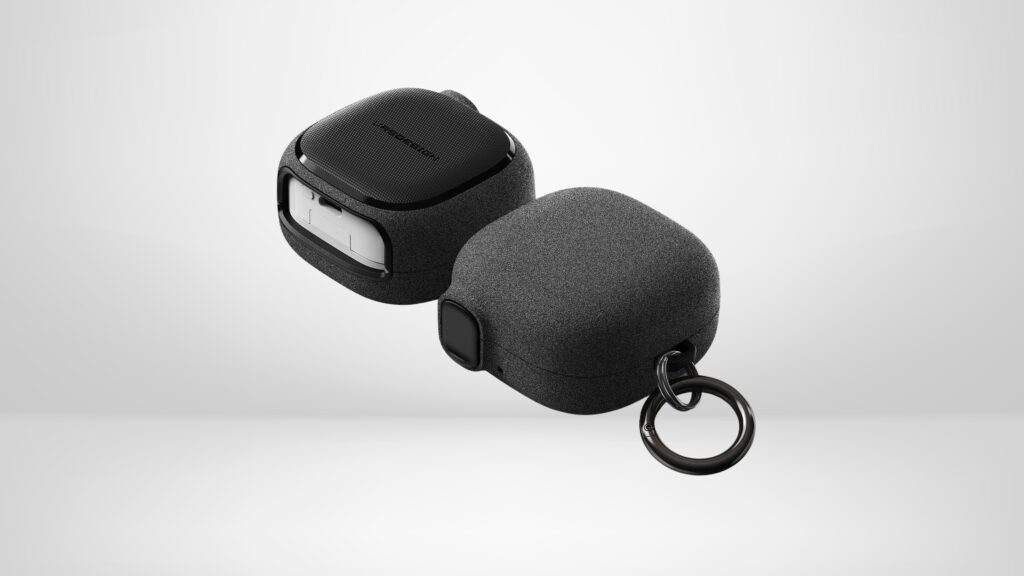
What We Like
- Front latch keeps the case securely closed under drops and bag pressure — held through all stress testing
- Slimmest latch case tested — more pocketable than the Spigen Lock Fit while still providing latch security
- Sandstone gray texture provides excellent grip and a distinctive, purposeful aesthetic
- Compact key ring loop integrates cleanly with the case design rather than adding a bulky carabiner attachment point
- Top cover attaches with exceptional tenacity — once on, nothing about this case shifts or moves
What Could Improve
- No MagSafe magnets — slight magnetic repulsion on MagSafe chargers but no alignment assistance or attachment
- Latch requires a two-step open process that adds friction compared to non-latch cases
- Latch feedback is tactile but quiet — less satisfying confirmation than the Spigen Lock Fit's audible click
- Top cover is extremely difficult to remove once fully set — switching cases requires real effort
- Sandstone finish completely changes the visual identity of the Buds 4 Pro — not a subtle protective cover
Video Review
The VRS Design case for the Galaxy Buds 4 Pro makes a different bet than every other case in this roundup. Where the Elago Duo optimizes for slim profile, the Rinke Onyx Magnetic for MagSafe functionality, and the Spigen Rugged Armor for brand consistency, the VRS Design optimizes for one thing above everything else: keeping the case closed. The front latch is the entire value proposition here, and if that’s what you need, this case delivers it at a slim profile that no other latch case in this roundup matches.
I came into testing the VRS Design with mild skepticism about the latch concept. How often does a buds case actually pop open unexpectedly? After testing it, I came away with more appreciation for the problem it solves than I expected — and a clearer sense of exactly who this case is for.
First Impressions and Build Quality
The VRS Design case arrives in clean packaging with the case, a key ring attachment, and extra adhesive strips. The first thing you notice is the finish: a sandstone gray texture that dramatically changes the visual identity of the Buds 4 Pro case. Where every other case in this roundup at least hints at what’s underneath, the VRS Design makes the Buds 4 Pro case almost unrecognizable. The sandstone texture is matte, tactile, and distinctive — it looks more like a compact tool than an earbuds case, which I mean as a compliment.
The front latch is the second thing you notice, and it’s the detail that defines the case. It sits centered on the front face, a small raised mechanism that you press to release and that clicks audibly when the case closes. The latch is the reason you’d buy this case over any other option here, and the build quality of that mechanism matters. It held up consistently across repeated open-and-close cycles during testing with no loosening or play developing in the mechanism.
At $24.99 — the same price as the Rinke Onyx Magnetic — the VRS Design feels appropriately valued. The build quality is solid, the fit on the Buds 4 Pro case is precise, and the finish has a premium tactile quality that justifies the price alongside the latch functionality.
Design and Aesthetics
The VRS Design case is the most visually distinctive option in this roundup. The sandstone gray finish is unlike anything else tested here — it’s not trying to match a phone case ecosystem, it’s not trying to stay invisible, and it’s not trying to look premium in a conventional sense. It just looks purposeful. The latch on the front adds a mechanical quality that reinforces the impression of a case built around function rather than aesthetics.
The trade-off is that if you like how the Buds 4 Pro looks — the clean glossy oval of the stock case — the VRS Design replaces that identity entirely. You’d barely know what’s inside without opening it. For some people that’s exactly the appeal. For others it might feel like too much visual departure from the product they bought.
The attachment loop on the side is notably smaller and more subtle than the carabiner loops on other cases in this roundup. Instead of a large loop for a carabiner, the VRS Design has a compact key ring loop — proportionate to the case and much easier to ignore if you don’t use it. This is one area where the VRS Design’s design sensibility beats the competition: it doesn’t force a bulky attachment point on users who don’t want one.
Protection
The VRS Design’s front latch is the protection feature that distinguishes it from everything else in this roundup that doesn’t have one. Once latched, the case does not open without deliberately pressing the release. I tested this aggressively — prying at the lid, squeezing the case, dropping it onto a hard surface — and the latch held every time. For anyone whose primary concern is keeping the Buds 4 Pro from going flying in a drop, this case provides a level of confidence that no non-latch case can match.
The adhesive strip attachment at the bottom is standard for this category. The top portion stays on with a tenacity that surprised me during testing — getting the top cover off when I first tried required real effort, to the point where I was briefly concerned about stressing the Buds 4 Pro case underneath. Once fully set, this case does not come off the Buds 4 Pro easily. That’s a feature for most users and a consideration to be aware of if you’re someone who switches cases frequently.
The overall material provides solid scratch and impact protection for everyday carry. The sandstone texture is more forgiving of contact wear than a glossy surface, and the matte finish hides minor scuffs better than the stock case does. This is not a soft case — the structure is firm — so it offers meaningful protection against the kind of impacts that would crack or scratch the stock plastic.
Grip and Feel
The sandstone texture makes the VRS Design the easiest case to grip in this entire roundup. Sandstone finishes have a micro-rough quality that’s almost sticky without being tacky — your fingers find purchase immediately and hold without effort. It’s a more confident grip than the Rinke’s matte finish and a different kind of grip than the Elago Duo’s silicone bottom. Where the silicone is soft and slightly compressible, the sandstone is firm and textured.
Pocket carry is comfortable despite the latch mechanism adding a small amount of front-face profile. The VRS Design is slimmer than the Spigen Lock Fit — the other latch case in this roundup — and that slimmer profile makes a real difference in pocket feel. It slides in and out of a jeans pocket without the extra deliberateness that the Lock Fit requires. If you want a latch case and pocket carry matters to you, the VRS Design is the better choice on that dimension.
One-handed opening requires two steps with the VRS Design: press the latch to release, then open the lid. That’s one more step than a non-latch case, and it’s worth acknowledging as a real change to the usage pattern. In practice it becomes muscle memory quickly, but in the first days of use it adds a small friction to every interaction. Whether that friction is acceptable depends entirely on how much you value what the latch provides in return.
Features
The front latch is the defining feature, and it earns its score because it genuinely works. The mechanism is secure, the release is deliberate enough that it won’t trigger accidentally in a pocket, and the closing action has enough resistance to confirm that it’s latched without requiring visual confirmation. Where the Spigen Lock Fit’s latch provides an audible click as feedback, the VRS Design latch is quieter — you feel it engage more than you hear it. Both work; the Spigen’s feedback is slightly more satisfying.
On MagSafe: the VRS Design has some internal magnetic material that creates an interesting interaction with MagSafe chargers — it repels slightly rather than attracting. This is not MagSafe compatibility. The case does not snap onto a MagSafe charger and does not add magnetic attachment functionality. The slight repulsion is a consequence of the materials used, not an intentional feature. Wireless charging works normally on a standard Qi pad.
The key ring loop is the attachment option here rather than a full carabiner loop. This is a more considered choice than the large loops on competing cases — a key ring is a more versatile attachment point than a carabiner loop for most people, and the smaller profile integrates more cleanly with the case design. The included key ring is basic but functional.
LED visibility through the front of the case is clear despite the latch mechanism occupying the center of the front face. There’s enough clearance around the latch for the LED to show through, and in practice you can check charging status without opening the case.
Who Should Buy the VRS Design Case
The VRS Design is the right case if two things are true: you want a latch, and you don’t want the bulk of the Spigen Lock Fit. It’s the slim latch option in a roundup where slim and latch don’t otherwise coexist. If you’re active, if you drop things, if you carry your buds in a bag where other items could stress the case, or if you’ve ever had earbuds go flying when a case popped open unexpectedly, the VRS Design’s latch addresses that directly at a profile that remains practical for daily pocket carry.
The sandstone aesthetic is polarizing in the best way — it’s distinctive and purposeful, but it does completely change the look of the Buds 4 Pro case. If you like that look, or if you don’t care about aesthetics and just want the latch, this is an easy recommendation.
Where it falls short: no MagSafe, and the latch feedback is less satisfying than the Spigen Lock Fit’s audible click. If MagSafe is on your list, the Rinke Onyx Magnetic is the only case that provides it. If you want the absolute best latch mechanism and bulk isn’t a concern, the Spigen Lock Fit wins that comparison. But for the combination of latch security and manageable pocket profile, the VRS Design occupies a unique position in this roundup.
Final Verdict
The VRS Design case earns its place in this roundup by solving a problem the other slim cases ignore: keeping the Buds 4 Pro case closed when it matters. The front latch held up under every test — prying, dropping, squeezing — and the slim profile means you're not paying for that security with a dramatically larger pocket footprint. For a latch case, the VRS Design is genuinely pocketable in a way the Spigen Lock Fit isn't.
The sandstone gray finish is a genuine differentiator. It gives the Buds 4 Pro case a purposeful, tool-like aesthetic that reads as intentional rather than decorative. The key ring loop — smaller and more practical than the carabiner loops on every other case here — shows the same considered design thinking. These aren't accidents; they're choices that reflect a case designed around real use rather than spec sheet features.
The honest limitations: No MagSafe magnets, which is a real gap for anyone coming from the Apple ecosystem. The latch feedback is tactile but quiet — the Spigen Lock Fit's audible click is more satisfying. The top of the case attaches with notable tenacity; removing it requires real effort, which is fine for most users but worth knowing if you switch cases. The two-step open process adds minor friction to every interaction.
Who should buy this: Anyone who wants a latch case and needs it to fit in a pocket comfortably. Active users, frequent droppers, bag carriers who want security without bulk. Anyone who appreciates the sandstone aesthetic and wants their Buds 4 Pro to look distinctive.
Who should look elsewhere: If MagSafe compatibility is on your list, the Rinke Onyx Magnetic is the only case that provides it. If you want the most satisfying and secure latch available and don't mind the bulk, the Spigen Lock Fit wins that comparison with its built-in hinge and audible click-close mechanism.
Was this helpful?
Frequently Asked Questions
Does the VRS Design Galaxy Buds 4 Pro case keep the lid from opening when dropped?
Does the VRS Design case support MagSafe wireless charging?
How does the VRS Design case compare to the Spigen Lock Fit for Galaxy Buds 4 Pro?
Is the VRS Design case easy to open one-handed?
What does the VRS Design Galaxy Buds 4 Pro case look like?
How does the VRS Design case attach to the Galaxy Buds 4 Pro case?
